середа, 25 травня 2016 р.

Питання на співбесіду

Приймаючи участь у співбесідах, я рідко дотримуюся свого плану, адже, на мою думку, співбесіда має лишатися "спів-" - тобто взаємною - "бесідою" - тобто діалогом рівних людей, що мають якісь спільні інтереси. Найбільше мене тішить, коли на співбесіді я дізнаюся про щось нове й цікаве.
Ось мій особистий список того, що я хочу дізнатися у кандидата, безвідносно його професійного рівня. Просто відповіді провідного "сіньора" будуть більш фундаментальними та розлогими, а молодшого "джуніора" - короткими, наприклад "Не знаю." :-)

понеділок, 23 травня 2016 р.

"Done" for everyone!

Probably each of us had that dialogue with a developer:
- How is your task? Is it okay?
- Yeah! It's done!
- Where can I test it?
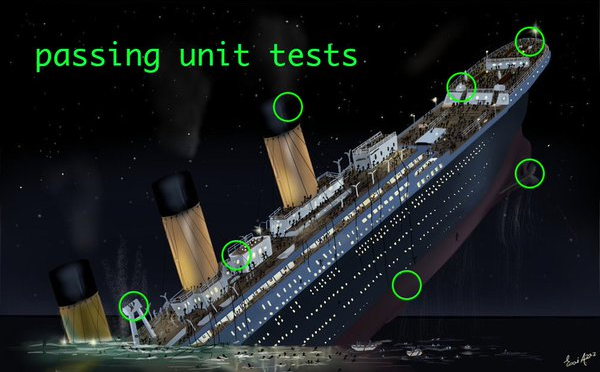
- No, it's not yet covered with unit tests / not passed code review / the last commit is almost there.


(Google points here for this picture: https://hoangluongsjsu.wordpress.com/ )

What is missing here is not exactly "Definition of "Done"", but a substitution of different levels of "Done":
- Personal "Done": "I can do nothing more about it", the task is handed over to another team member."
- Team's "Done": "We have done all we could do internally. Now we can demonstrate the results to a wider audience, but we are still open for changes and suggestions in case of interference with some other team."
- Project's "Done": "We ship it! All your claims and change requests you should send to our legal department."

Working with agile Scrum-like process which states team commitment, we should always put the Team's "Done" to tasks' Acceptance Criteria.
Because putting personal commitments to a task description looks like avoiding responsibility for possible future changes in its scope due to integration issues.
But putting project oriented goals is even worse as they are likely not to be testable at the point, when a particular task is done. That leads to "requirements inflation", when the "key project points" are written everywhere and at the same time are not met anywhere.

Watch your requirements. And keep your task descriptions clear and testable.

середа, 4 травня 2016 р.

Мої просрані релізи

За останні кілька років я брав участь у не менше ніж 100 випусках нового коду у світ. Більшість разів усе було чотко, але реальність іноді  дарувала нам сюрпризи, і зовсім не завжди вони були пов'язані із спеціально навченими індійськими спеціалістами баз і консолей.
Прошу до вашої уваги 3 випадки, що завжди спадають мені на думку при словах "Fucked up release".


пʼятниця, 22 квітня 2016 р.

Agile and numbers


In his recent post, Seth Godin writes:
When you measure the wrong thing, you get the wrong thing. Perhaps you can be precise in your measurement, but precision is not significance.
On the other hand, when you are able to expose your work and your process to the right thing, to the metric that actually matters, good things happen.
We need to spend more time figuring out what to keep track of, and less time actually obsessing over the numbers that we are already measuring.


This is the essential part of the "agile development".
In my current team we spend lots of time on "Backlog grooming sessions" arguing on numbers, getting asked "why is it 5 not 8?"
On the same time, nobody cares on getting the Burndown Chart to look like burn down. The reason is "We have many important and urgent tasks with vague deadlines emerging meanwhile in the sprint."
So on our "Sprint planning" meeting we are basically putting the "precisely measured" tickets to a heap of immeasurable ones. What we get is precisely immeasurable. Like dropping 10 carat diamonds to a bucket of soil and trying to estimate the bucket weight.
What precision we might get?


Moreover, the measurement does not influence our actions in any way.
Our the most precise scale of estimations probably should have 3 values:
- "It's OK to try to do this now"
- "Better not to try now"
- "We don't know"
Having the priorities in place, this simple scale will give us enough information to plan sprints, and dramatically reduce time spent on estimation and planning.
середа, 20 квітня 2016 р.

Test Design Strategy

Updated my Test Strategy Template with a new section.
Enjoy :-) Comments are welcome!

Test Design Strategy

Test Design activity is a process of identifying and formalizing Test Cases and Test Suites (in forms of Check Lists, mind maps, etc.) in regards to risk weights, i.e. the value customers might loose if the test is not conducted; or in other words, the risk of unawareness of the unwanted behavior of the system.
Each Test Case is explicitly related to a piece of Requirements, as well as to Test Suites it is run under.

пʼятниця, 1 квітня 2016 р.

Сем проти Джеймса (скандали-інтриги-розслідування у віршах)


Результат пошуку зображень за запитом "cem kaner james bach"
Якщо ви достатньо давно в тестуванні, то маєте знати Джеймса Баха (James Bach). Не менш відомою постаттю у галузі  методологій розробки є Сем Канер (Cem Kaner), автор багатьох книжок і публікацій. Колись давно вони разом були співзасновниками Школи Контексто-керованого Тестування (Context Driven Testing School), що заклала засади сучасного розуміння дослідницького підходу (exploratory testing). Після того вони чогось посварилися, побили горщики, та перестали спілкуватися. І щось мені підказує, що розбіжності в них були зовсім не у способах тестування, а у чомусь іншому. Але що було, те загуло. 

неділя, 27 березня 2016 р.

Мої RSS підписки про Тестування. Березень 2016

За рік я знайшов кілька нових, вартих уваги блогів.
Ось останній перелік тих, хто активно пише щось корисне.
(минулорічний список тут http://lazytesterua.blogspot.com/2015_03_01_archive.html)


БлоґКоментар
Gerald Weinberg's Secrets of Writing and ConsultingJerry Weinberg - американський ІТ консультант зі стажем. Цей мудрий чоловік був моїм відкриттям року. Усім раджу його книжки. Від 80-х він їх чимало написав.
Agile Testing with Lisa CrispinЦікаві речі про тестування і менеджмент
Gojko AdzicРозумний дядько, консультант в ІТ. Пости про автоматизацію дуже мене надихнули.
QA HiccuppsТестер, що намагається нестандартно дивитись на речі. Знайшов його за серією публікацій "Тестування - як жартування" (Joking With Jerry)
Uncharted WatersЧудовий блог про різні аспекти роботи в ІТ
UX MovementСвіжі погляди на дизайн користувацьких інтерфейсів
Seth Godin's Blog on marketing, tribes and respectБагато пише про все підряд. Має надихати на думки...
Linux.org.ru: НовостиРаніше не згадував, але оце я читаю вже дуже давно. Щоб бути в курсі.